


Workshop journal · · 7 min read
A whole map in four days: what a frontier AI changes for modding
Tried a free AI and came away disappointed? I get it. What I used to bring the Season of Revelation into Warhammer III is a different tool: an agent, which reads your files, runs the modding tools, checks its own work and fixes it. Here is what it did, what it can do for your mod, what it costs, and how to start.
“I tried it, it was mediocre”
While showing this mod around, I heard four reservations, all fair:
- you need to understand what the AI produces;
- nobody wants the creative part turned into prompts;
- free models give mediocre results;
- and the good ones cost money.
The third one deserves a closer look, because it's true, and it hides the key point. A free AI in a chat window is someone who answers and then waits. What brought a whole Warhammer I map into Warhammer III in four days, from 20 to 23 September, is something else: a frontier model, used as an agent.
A chat answers, an agent works
In a chat window, you copy an error, the AI suggests a fix, you copy it back, you run it again, you come back. You are the AI's hands. An agent (Claude Code from Anthropic, Codex from OpenAI) makes that trip itself: it reads the mod folder, runs the tools, reads what they answer, fixes, and goes again until the proof is there. You judge.
And the gap between models is real. On Terminal-Bench 4.0, a test where the AI has to complete real tasks in a terminal, Claude Opus 5.5 succeeds at 66.4% (Anthropic); Gemini 3.8 Flash, a fast and cheap model, at 19.1% (Google's table, via Vellum). More than three times as many tasks carried through: that's the difference between “it let me down” and “it worked”.
What it did on this project
I'm not asking you to take my word for it. Here is what was done, and you can see it:
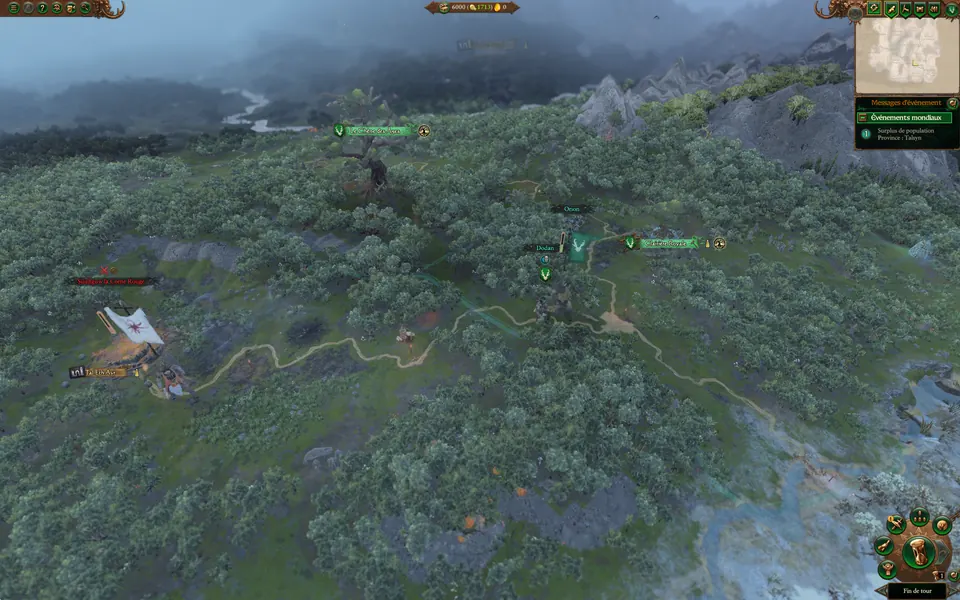
- A whole map ported: 400 × 440 hexes, 61 regions (57 with a town), 26 provinces, read layer by layer from Warhammer I's files and realigned for Warhammer III.
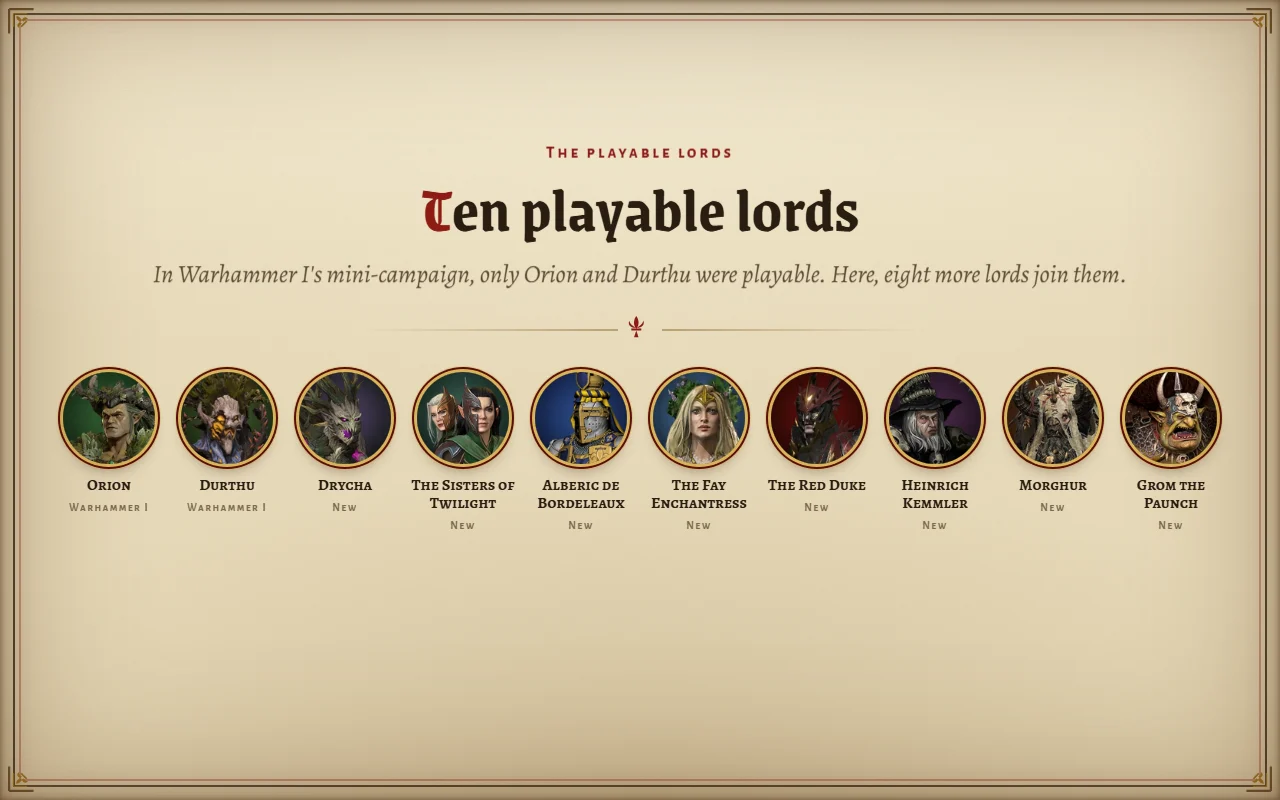
- Ten playable lords instead of Warhammer I's two, with their quests, their victories and, for the Red Duke, mechanics of his own: the lost dukedom, Abhorash's favour, the blood tax and blood oath, Richemont's hunt.
- 1,499 texts in French and English, with official names checked, and 50 event pictures.
- Games played by the AI, thirty turns in a row without a script error (with Orion, Drycha and Kemmler), to flush out crashes before a player hits them.
- The 43 voiced lines of the mini-campaign, found again in Warhammer III's sound banks.
- Landmark icons drawn with code, in Creative Assembly's style.
- This site, its ornate map and its guides, and even the mod's showcase video: editing, sped-up loading screens, opening and closing animations, three encodes for Discord.
What it can do for your mod
- Tables: read, create and fill hundreds of rows without a single key typo, through RPFM's MCP server (MCP is the standard plug through which an agent connects to a tool).
- Lua scripts: quests, dilemmas, mechanics, written, reread and tested.
- Texts: translations, official names checked, clean
.locfiles. - Crashes: reading a report, a log, a dump, and finding the missing data.
- The tedious stuff: converting, realigning, comparing, counting, tidying. Everything that steals your evenings.
- Documentation: it keeps the log of what was done and why, for you as for the next session.
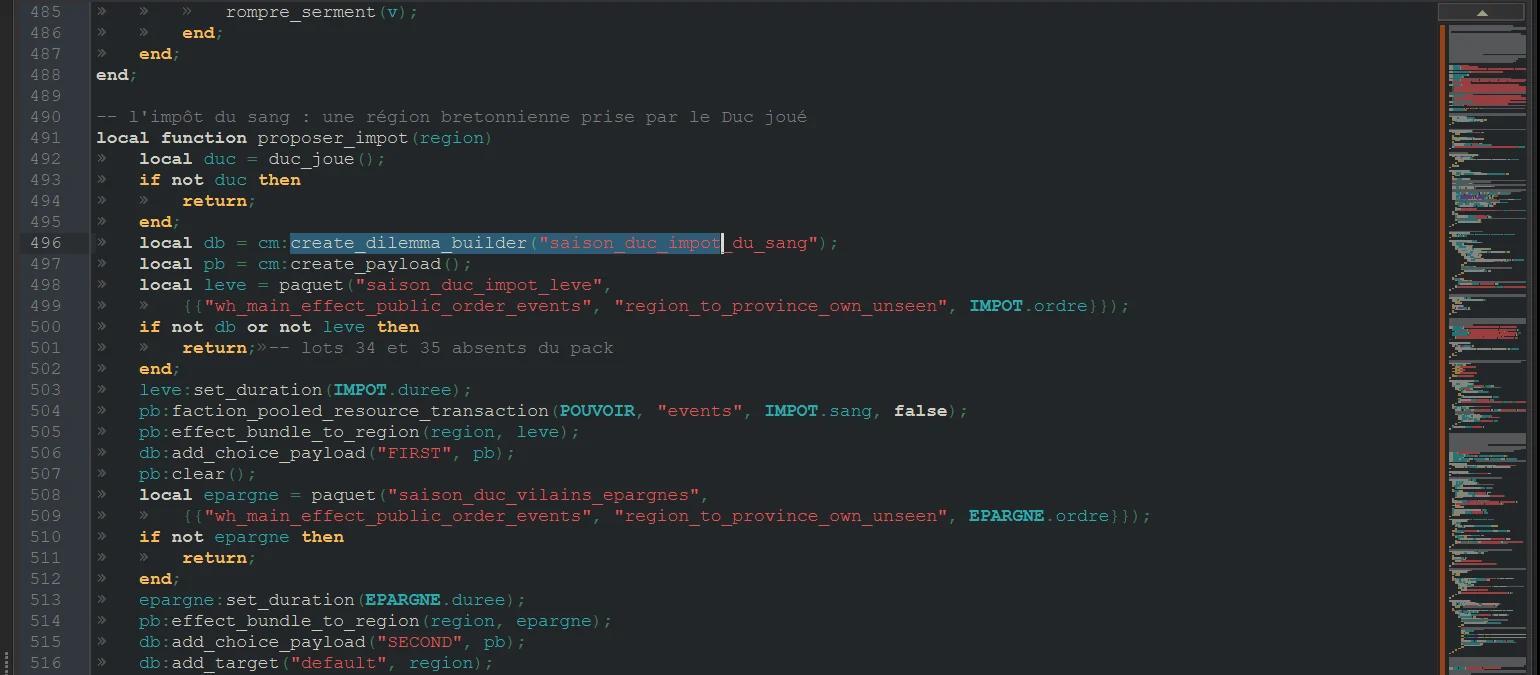
The community is already getting ready. RPFM has shipped an MCP server since version 5 and, since 5.0.6, documentation to help agents decode tables, written by ChaosRobie (release notes). Tools like Total War Mods Translator translate thousands of mod lines with Claude or GPT.
You stay the modder
An agent doesn't decide what your mod should be. You give it a goal, a criterion, sources and don'ts; it works and brings you proof; you judge, in game, against your reference. Then you go again: iteration is what makes the quality, and you are the one steering it.
What you delegate is your call. For me, the judgement, the lore and every decision stayed human; the rest was delegated, and I had more time for what I enjoy: watching the map come alive, and deciding what story it tells.
What it costs
In September 2026, Claude Code comes with Claude Pro, at $20 a month before tax; Max starts at $100 for long sessions (pricing). Codex comes with ChatGPT Plus, at $20 a month; Pro starts at $100 (pricing). Roughly the price of a DLC a month, for a tool that works while you judge.
Start with a ten-minute task
On a dated copy of your mod, with the agent open in its folder, give it a real small task: “Change this unit's cost, show me the row before and after, and tell me how to check it in game.” Then judge it in game: if it's right, you've just won back your first evening.
The full sequence, from installing the agent to that first task, is in Working with an AI on a big mod, along with the method that held up on this project.
Everything else, step by step, with examples to copy, is in the “AI for modding” guide. And if you want to build the rest of Bretonnia with us, suggest your ideas: it's a community project, and this is when everything gets decided.
Sources
- Anthropic: Claude Opus 5.5 (22.09.2026), models overview, Claude Code, pricing.
- OpenAI: GPT-6 Astra, GPT-6 Sol and Luna (TechCrunch, 22.09.2026), ChatGPT and Codex pricing.
- Gemini 3.8 Flash on Terminal-Bench 4.0: Vellum, from the table published by Google.
- RPFM: release notes; Model Context Protocol; Total War Mods Translator.
- The project's facts come from our working notes (error log, test reports) and from this site. Checked on 25 September 2026.